Red Box, Late Night: The Strange Second Lives of London’s K6 Phone Boxes
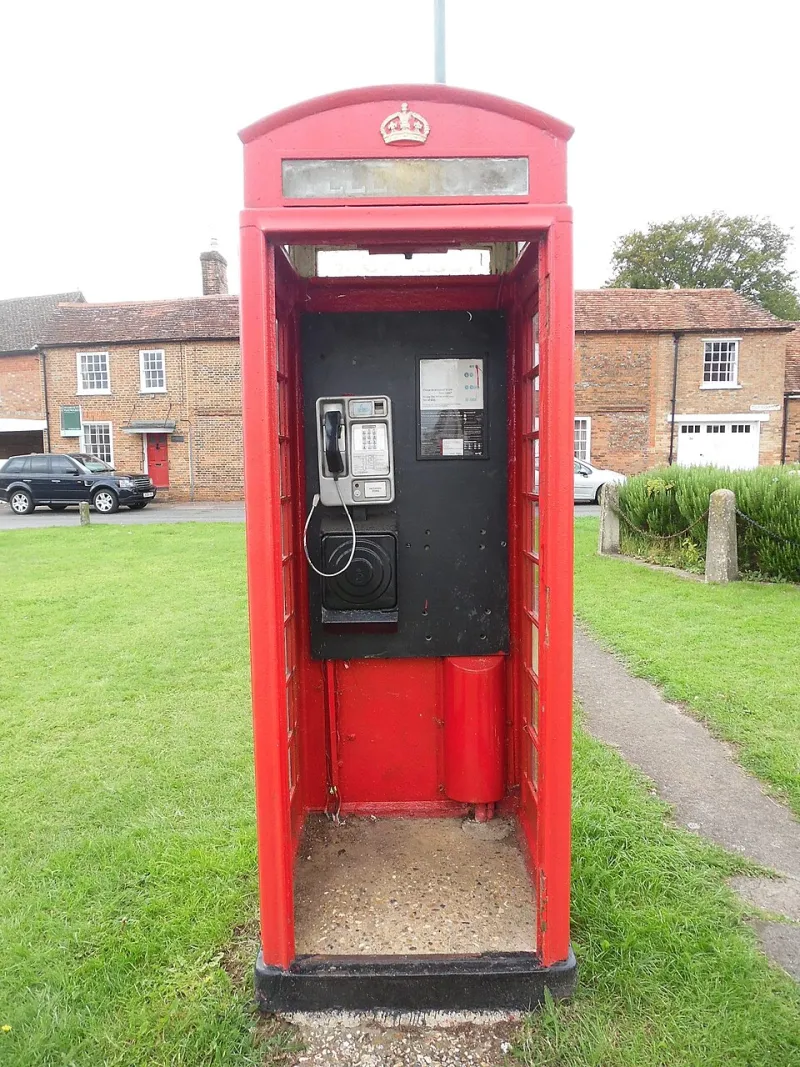
Photo: David Hillas , CC BY-SA 2.0, via Wikimedia Commons
At 11.40pm, a red phone box on a London street can still stop you in your tracks. Not because you need to call someone — nobody under 40 has voluntarily used a payphone since the dawn of the group chat — but because the thing is glowing. Inside, there might be a shelf of paperbacks, a green cabinet with a defibrillator, or a hand-written sign promising a gig for six people. The handset is long gone. The drama remains.
The K6 is the box most people picture when they say ‘phone box’: designed by Sir Giles Gilbert Scott, introduced in 1935 for the King’s jubilee, and stubbornly red. Many are listed. Many more have been sold, adopted or quietly repurposed under BT’s Adopt a Kiosk scheme, which lets communities take on a box for a token sum and turn it into something useful. What that ‘something’ is depends on the postcode. Here is the late-night field guide.
The K6 in 60 seconds
You are looking at street furniture that outlived the payphone. The glass, the crown, the domed roof and the red paint are all heritage; the actual telephone is usually history. Some boxes still have a dead handset dangling like a prop. Some have been stripped back to a shell. A few have been rewired, relit and given a second job. The rule for after-dark exploring is simple: if it is lit, look closer. If it is dark, leave it alone.
What is actually inside?
Broadly, you will find one of five things: a community library, a defibrillator cabinet, a tiny shop or coffee hatch, a piece of public art, or a rumour. The library boxes smell faintly of wet paper and good intentions. The defib boxes hum and have a green or white cabinet where the handset used to be. The shop boxes are rare and usually shut by 6pm, which makes them useless to the after-dark crowd but excellent for daytime nosiness. The art boxes are hit and miss. The rumour boxes are the most fun.
Library boxes: take a book, leave a book, don’t dump your rubbish
The phone box library is the most common second act. Villages love them; London has a scattering of them where a community group has adopted a box and filled it with crime novels, cookbooks and the odd self-help title from 2004. After dark, a lit shelf in a red box looks like a tiny beacon of civilisation. It is also unstaffed, which means it runs on trust and the honour system.
Useful rules: take one, leave one. Do not leave damp books, broken spines, or a box of DVDs nobody asked for. Do not use the box as a bin. If the door is stiff, lift it slightly before pulling. If there is a laminated sign with opening hours, believe it. If there is no sign, assume it is always open but never guaranteed. And if you see a paperback you want at 1am, take it — that is the entire point.
Defib shrines: respect the green cabinet
A phone box with a defibrillator is not a quirky photo opportunity. It is a piece of lifesaving kit in a very London disguise. The cabinet is usually accessed by calling 999 and getting a code from the ambulance service; the box itself may be lit, alarmed or both. Do not smash the glass for a laugh. Do not test the cabinet. Do not treat the red box as a shelter while someone is having a cardiac arrest.
At night, these boxes double as landmarks. ‘Turn left at the phone box that can restart your heart’ is a genuinely useful instruction in a city where every other street looks the same after the pubs close. Just remember: the defib is for emergencies, not for settling arguments about whose turn it is to buy chips.
The Soho six-person rumour
There is a persistent rumour that one Soho phone box has hosted gigs for an audience of six. I have not been on the guest list. I have seen a flyer. The story goes that a band, a comedian or a very brave poet sets up inside, the door opens, six people crowd in, and the whole thing is over before the door has properly shut. If true, it is the most London venue imaginable: smaller than a lift, worse ventilation, no bar, no bouncer, no point pretending you are not standing on someone’s foot.
Treat it as a rumour, not a booking. If you see a flyer, read the details. If you see a queue of six, you have missed it. If you see a crowd of 20, you are probably at a different thing entirely. And if the box is empty, congratulations: you have discovered the most exclusive venue in the city.
How to use one without being a muppet
Do not force the door. Do not graffiti the glass. Do not use the box as a toilet, a smoking shelter or a place to leave your takeaway. Do not flypost the panels. If it is a library, leave it tidier than you found it. If it is a defib, call 999 first and follow instructions. If it is an event, verify it before you turn up and do not block the pavement. If you are taking photos at night, do not flash into people’s faces. The box is small; your manners should be bigger.
Why it feels more after-dark than anything with a bouncer
Phone boxes are unlicensed, unstaffed and unimpressed. They do not have a guest list; they have a door that sticks. They do not sell you a £16 cocktail; they offer a book, a heartbeat or a rumour. At 2am, a lit red box is a promise that the city still has small, weird, useful things in it. That is more ‘London after dark’ than any club with a velvet rope and a minimum spend. It is also, frankly, more 10nd0n.