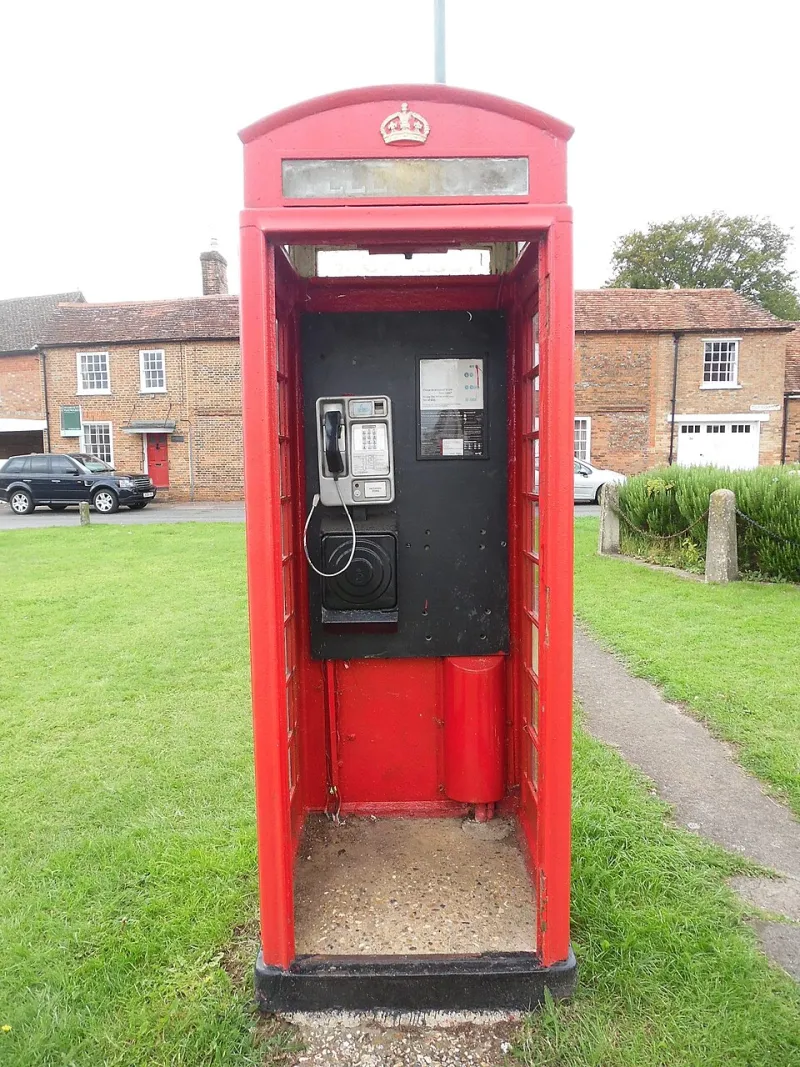
C0DE W4LK: A Late-Night Sticker Safari Through London’s Accidental Alphabet
Photo: Tagishsimon, CC BY-SA 3.0, via Wikimedia Commons
The city is already speaking in l33t
Somewhere between a fried chicken shop and a bus stop, London starts to look like a puzzle. The sign says 'C0FFEE'. The shutter says '5H0P'. A lamppost wears a QR code like a temporary tattoo. None of it is a conspiracy. Most of it is bad typography, utility paint and somebody with a vinyl cutter. But walk it at night and the city feels like an accidental codebook — one written by signwriters, councils and bored people with stickers.
That is the premise of this route: not a formal trail, no app, no ticket. This is a 10nd0n walk. Just a wander from Bethnal Green to London Fields, roughly two miles, best done after 8pm when the shop lights make the glyphs glow. It is a scavenger hunt for things that were never meant to be clues. The prize is a better eye and maybe a bag of chips.
Start: Bethnal Green Road, where letters go missing
Begin outside Bethnal Green station and head east. The first rule of the accidental codebook is that leetspeak is everywhere once you stop reading properly. 0 is O. 1 is I. 3 is E. 5 is S. 7 is T. 4 is A. Shopfronts use these substitutions for cheap reasons: a missing letter, a copyright dodge, a font that looked good at 2am. 'C0FFEE' is not a riddle. '5TUD10' is just a studio with a typo. But collected over twenty minutes, the substitutions start to look like a language.
Look up, not down. Upper floors keep older signs: painted lettering, ghost lettering, a phone number with too few digits. Look at the edges: shutter graffiti, delivery stickers, council notices with reference numbers. The point is not to solve anything. It is to notice how much of the city is already written in shorthand.
Turn: Cambridge Heath Road and the municipal glyphs
Head north to Cambridge Heath Road and turn left. This is where the walk gets properly weird. Pavement and road surfaces are covered in spray-painted marks — arrows, brackets, numbers, letters like 'SO' or 'WC' — that look like occult symbols but are usually utility markings. Gas, water, cable, drainage. A yellow line is not a riddle; it is a warning to a digger. A blue arrow is not a message from the underworld; it is somebody avoiding a pipe.
Treat these as the city's oldest layer of code. They are genuinely hidden in plain sight, and they are not for you. Do not stand in the road to photograph them. Do not follow a spray-painted arrow into a private car park. The fun is in the looking, not the trespassing. If a mark has a council logo, a date or a contractor name, it is municipal, not mystical.
The sticker layer: Hackney Road
Continue up Hackney Road towards London Fields. This is the sticker layer: lampposts, bins, shutters and the backs of bus stops wearing years of paper and vinyl. Some stickers are ads. Some are art. Some are someone's band. A few are actual puzzles, usually with a QR code and a deadpan instruction like 'scan me if you dare'. Most are not.
Here is the test for telling a genuine message from a bored sticker artist. First, repetition: a real campaign appears in clusters, with the same placement rules. A one-off sticker on a bin is probably someone's afternoon. Second, typography: proper kerning and a consistent palette suggest a budget; wonky photocopy energy suggests a gig. Third, context: a QR code on a record-shop window is probably a release; a QR code on a lamppost at 11pm is probably a gamble. Fourth, weather: fresh paper is suspicious; sun-bleached paper is history. Fifth, ask yourself what the sticker wants. If it wants your email, it is marketing. If it wants nothing, it is art.
The QR code rule
Do not scan random QR codes. This is not me being a killjoy; it is basic night-out hygiene. A QR code can open a menu, a mailing list, a payment page or something worse. If you must scratch the itch, use a phone camera that previews the URL before opening it, and never enter personal details from a sticker on a lamppost. The best codes are the ones you photograph and decode later, when you are not standing in the dark with your phone out.
Finish: London Fields and the 24-hour shop
End at a 24-hour shop near London Fields and review your camera roll. You will have photographs of signs that mean nothing, pavement marks that mean 'gas', and at least one sticker that looked like a clue but was probably a DJ night. That is the correct outcome. The accidental codebook is not a secret society. It is a way of paying attention.
If you want to make it a proper game, give yourself a simple scorecard: five number-for-letter swaps, three municipal glyphs, two stickers older than you, one QR code you resisted. The winner buys the crisps. The real prize is that the walk home feels different — less like a commute, more like a level you have not finished yet.